Honored as Lighting Brand at TOI Home & Decor Awards 2026
Prices inclusive of taxes + FREE SHIPPING!


Ceramic Origami Lamps: Folded Pendant & Wall Lights
Sharp folds and crisp angles that shape light and shadow




All About Ceramic Lights
Origami Lamps in Ceramic
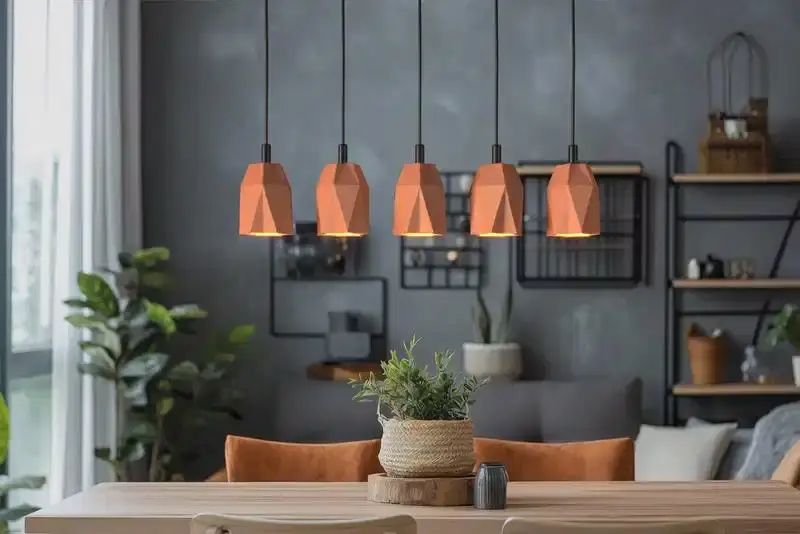
Origami lamps take their look from folded paper: flat faces, sharp edges and angles that meet in crisp lines. A paper shade can be folded at home, but it stays light and soft. A ceramic origami lamp keeps the same geometry in a solid material. Each facet is made in clay and fired, so the folds hold their edge and do not soften or fade the way paper does. The folds also change how the lamp looks when it is lit. Each flat face catches light at a different angle, so the shade shows bands of light and shadow across its surface. From below, the opening glows, and when the lamp is off, the faceted outline is still clearly visible. This is why an origami lamp works as a focal point in a room with plain walls and simple furniture. The shape does the decorating, so you need very little around it.
Pendant, Chandelier or Wall Lamp: Choosing Your Origami Form
The Origami Series comes in three forms, and each one solves a different problem. Pendants hang from a single point and suit places where one strong shape is wanted, such as above a table, in a hall or in a drawing room. Wider shades spread light across more of the room, while narrower shades keep it close to the table or seat below. The linear chandelier carries several small folded shades on one bar. It suits a long dining table, a kitchen island or a bar, where a single pendant would leave the ends dark. Wall lamps free up the ceiling. They work beside a bed, along a hall or on a drawing room wall, where light is needed at a lower height or where the ceiling is too low for a pendant. They also repeat the folded shape, so pendants and wall lamps can share a room and still look consistent. If you are unsure, start with the space. Choose a pendant for an open area, a linear chandelier for a long one and a wall lamp for a low or narrow one.
Where Origami Lamps Work Best
Origami lamps suit rooms where the lamp is seen clearly and from more than one side. In a hall, a pendant is the first thing a visitor sees. The folded shape gives the entrance a clear point of interest, and a wide shade lights the space without needing extra fittings. In a drawing room, the lamp is seen for long periods, often from a seat, so height and glare matter. Hang it above the line of sight, or use a pair at the same height on either side of a sofa or console. In a bedroom, wall lamps on both sides of the bed give soft light and keep the bedside tables clear. A single pendant also works when the ceiling is high enough. Over a dining table, hang a pendant or linear chandelier low enough to light the table, but high enough that people across it can still see each other. A warm bulb softens the sharp edges of the folds and brings out the shadows between the facets.
