Honored as Lighting Brand 2026, at Times Of INDIA Home & Decor Awards
Prices inclusive of taxes + FREE SHIPPING!


Wabi-Sabi Lights: Pendant, Ceiling, Wall & Floor Lamps
Pendant, ceiling, wall, table and floor lamps in natural clay finishes


All About Ceramic Lights
Wabi-Sabi Meaning
Wabi-sabi is a Japanese way of seeing beauty in things that are imperfect, incomplete or changing over time. Instead of chasing a flawless, symmetrical finish, wabi-sabi finds character in a rough edge, an uneven glaze, or a shape that looks handmade rather than machine perfect. The idea comes from two older Japanese concepts. Wabi is about simplicity and quiet, understated beauty, the kind found in a plain object made with care. Sabi is about the beauty that comes with age, like the way a surface changes or weathers over years of use. Put together, wabi-sabi is a way of valuing things exactly as they are, rather than waiting for them to look new or perfect. In lighting and home decor, this shows up as organic, slightly irregular forms, natural material tones instead of high gloss finishes, and a general sense of calm rather than polish. A wabi-sabi lamp is not meant to look mass produced. Small variations in shape or glaze are part of the piece, not a flaw to fix.
Wabi-Sabi Interior Design
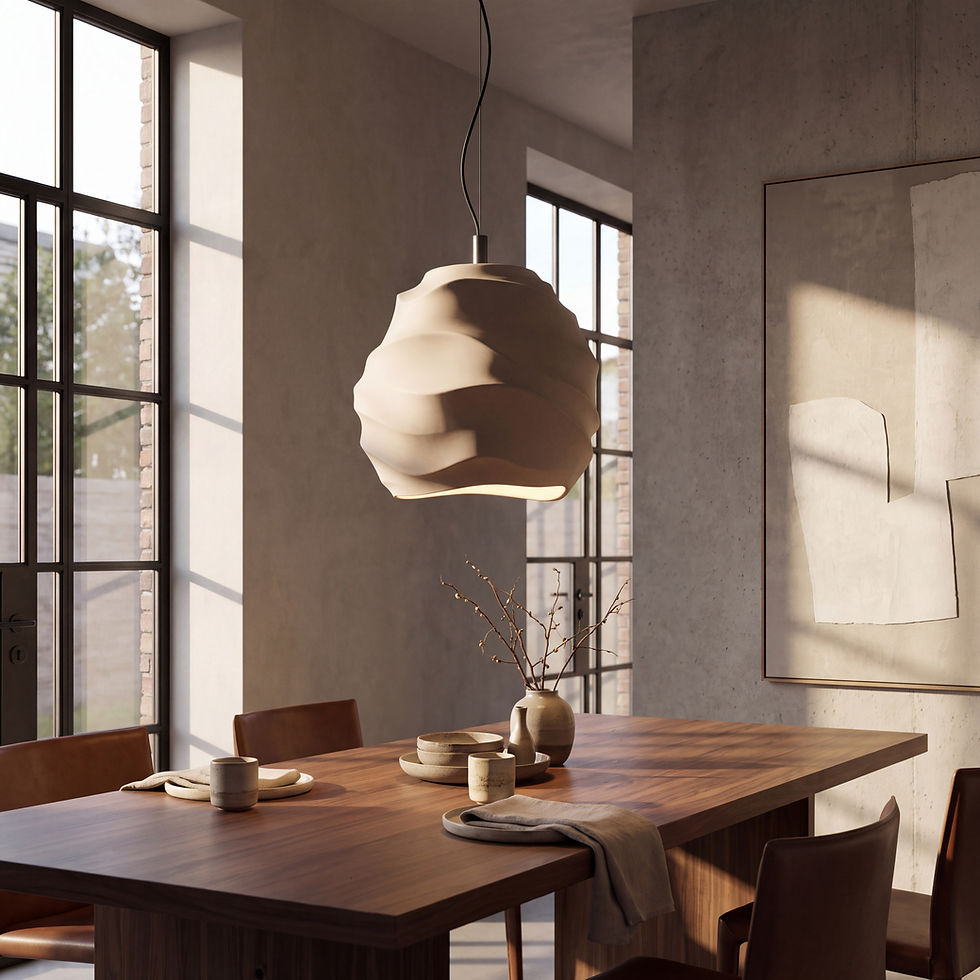
Wabi-sabi interior design builds a room around natural materials, muted tones and a few well-chosen pieces rather than filling every surface. The goal is a calm, lived-in feel, not a showroom look. Clay, stone, linen and unfinished wood all work well in a wabi-sabi interior, since they age and wear in ways that add character over time. Colours tend to stay close to nature, off white, sand, warm grey and earthy browns, with the occasional deeper tone for contrast rather than as the main palette. Lighting plays a bigger role than people expect. A single sculptural pendant or an unevenly glazed ceiling lamp can carry the whole feel of a wabi-sabi room, since the shape and finish of the fixture itself becomes part of the decor, not just something to switch on. Pairing a wabi-sabi lamp with simple furniture and natural textures, rather than glossy or heavily patterned pieces, keeps the room feeling coherent. The style suits people who prefer fewer, better objects over a room full of matching sets. If a piece looks a little different from the last one you saw, that is usually the point, not a defect.
Choosing Wabi-Sabi Lighting
Wabi-sabi works across every type of fixture, but each one carries the style a little differently. Pendant Lamps: A wabi-sabi pendant is usually the most noticeable piece in a room, so an irregular shape or an unevenly glazed shade reads as a genuine style statement rather than a background fixture. These work well as a single striking piece over a table or reading corner. Ceiling Lamps: A wabi-sabi flush mount or semi-flush brings the same organic character to a room without hanging low, useful where you want the style but need to keep the fixture close to the ceiling. Wall Lamps: Wall sconces in a wabi-sabi finish work well as a secondary layer of light, especially where the texture of the piece can be seen up close, along a hallway or beside a reading chair. Table and Floor Lamps: These sit closer to eye level than any other fixture, so the clay body, glaze and shape are easiest to appreciate here. They also work well as a starting point if you want to try the style in one corner of a room before committing to a ceiling or pendant piece.
